
Land
Construction financing for small developers in Canada
TESA · August 1, 2026 · 16 min read

Construction financing for small developers in Canada

For most small Canadian developers, the fastest practical route to close a build is a layered capital stack: a senior construction loan as the foundation, a mezzanine or syndication layer to fill the equity gap, and CMHC-insured options where the project qualifies. That structure is not theoretical. Programs like the CMHC Apartment Construction Loan Program can materially reduce the sponsor equity a small developer needs to bring to the table. TESA works with developers at exactly this stage, packaging the capital stack and lender-ready documentation before a single term sheet is requested.
Two capital components every small developer needs to plan for:
- Senior construction debt: the primary loan, typically draw-based and interest-only during the build, covering a substantial majority of total project costs on a conventional basis (more for CMHC-insured rental projects).
- Gap capital: the difference between senior debt and total project cost, filled by sponsor equity, mezzanine debt, preferred equity, or a syndication structure.
Next step: before approaching any lender, assemble your core document set: pro forma, site control evidence, permit status, and a signed contractor agreement. That package determines which lender types will engage and on what terms.
Pro Tip: Order a feasibility study before you spend time on lender outreach. Knowing your numbers cold, including land cost, hard and soft costs, and projected revenue, is what separates developers who get term sheets from those who get polite declines.
Table of Contents
- What construction financing sources are available to small developers in Canada?
- How to structure a capital stack that actually closes
- What do lenders actually look at when underwriting small developer loans?
- What do construction loans cost, and how long does the process take?
- What documents do you need before approaching a lender?
- How do you fill the financing gap when senior debt is not enough?
- Which Canadian programs can materially reduce your equity needs?
- How TESA supports small developers from feasibility through financing
- Key takeaways
- TESA turns your development idea into a funded project
What construction financing sources are available to small developers in Canada?
The financing universe for small developers in Canada spans six distinct lender types, and each one underwrites differently, moves at a different pace, and suits a different project profile.
Chartered banks and credit unions are the lowest-cost option when you qualify. They underwrite conservatively, want to see a track record, strong liquidity, and a project in a market they understand. Approval timelines run from several weeks to a few months. Credit unions sometimes show more flexibility on smaller or infill projects than the big banks do.
CMHC-insured programs (the Apartment Construction Loan Program and MLI Select pathways) are purpose-built for rental housing of five or more units. They offer the most favourable advance rates available in Canada for eligible projects, with the option to convert to a competitive long-term mortgage at stabilization. The trade-off is a longer application process and qualifying criteria around affordability, accessibility, and energy efficiency.
Provincial programs target purpose-built rental at below-market rents. They are not available everywhere, but where they apply, they can significantly reduce the developer's cash requirement. Eligibility and application windows vary; check the relevant provincial housing authority for current rules.
Mortgage investment corporations (MICs) and private lenders move faster than institutional lenders and ask fewer questions about track record. Smaller developers with limited track records often rely on MICs and private lenders, accepting higher cost for speed and flexibility. They are best used for land acquisition, bridge financing, or pre-development stages where institutional timelines are prohibitive.
Mezzanine lenders and preferred equity providers sit between senior debt and sponsor equity in the capital stack. They fill the gap when senior debt does not cover enough of the project cost and the developer cannot or does not want to bring more cash equity. Cost is higher than senior debt, but it can be the difference between a deal closing and stalling.
Joint ventures and syndication involve bringing in co-sponsors or pooled investor capital. A JV with an experienced co-developer can also satisfy lender track-record requirements that a first-time developer cannot meet alone.
| Lender type | Typical advance rate | Application timeline | Best suited for |
|---|---|---|---|
| Chartered bank | typically high LTC (conventional) | 6 weeks | Repeat developers, strong pro forma, urban markets |
| Credit union | typically high LTC | 4–10 weeks | Smaller projects, local infill, community-oriented builds |
| CMHC-insured (ACLP/MLI) | Higher than conventional for qualifying rental | 3–6+ months | Purpose-built rental, 5+ units, affordability/energy criteria |
| Provincial program | Varies by program | Varies; competitive intake | Below-market rental, provincial priority areas |
| MIC / private lender | typical LTC ranges | Days to 2–3 weeks | First-time developers, bridge, land, speed-critical deals |
| Mezzanine / preferred equity | Fills gap above senior debt | 2–6 weeks | Equity-gap situations, experienced sponsors |
| JV / syndication | Deal-specific | Varies | Track-record gaps, large equity requirements |
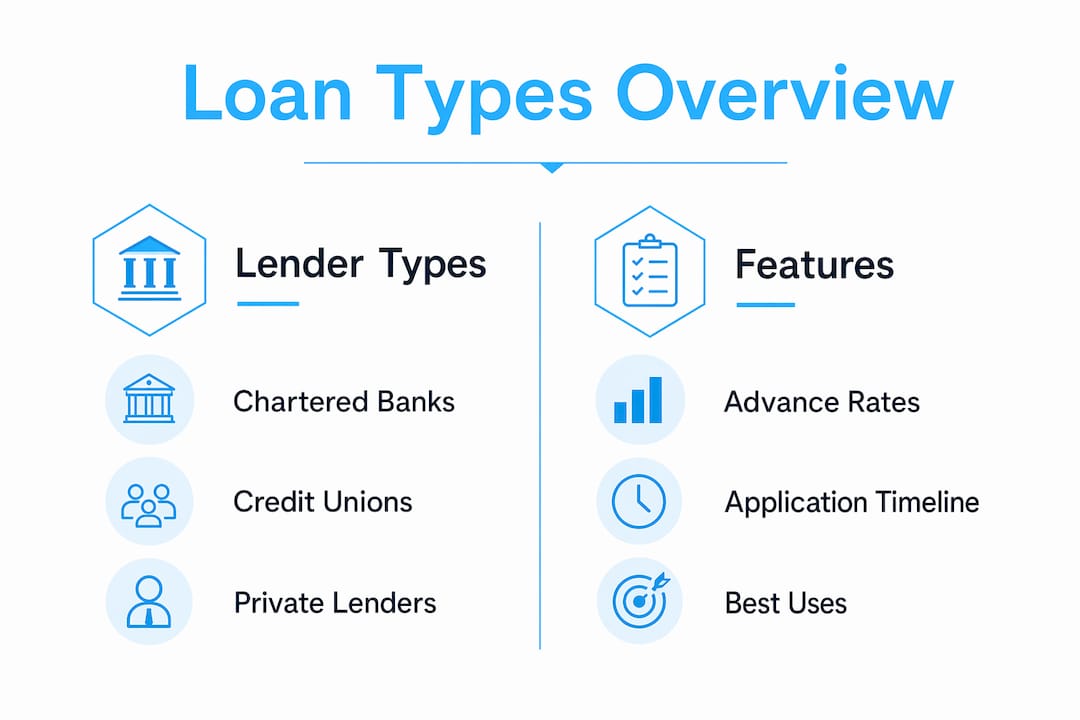
LTC = loan-to-cost. Advance rates and timelines are general ranges; actual terms depend on lender, market, and project specifics.
How to structure a capital stack that actually closes
The capital stack is the order in which money flows into a project and, more importantly, the order in which it gets paid back. Senior debt sits at the top of the repayment priority, meaning it gets paid first if something goes wrong. Mezzanine debt comes next. Sponsor equity absorbs losses last. Lenders price their risk based on where they sit in that hierarchy.
For a small developer, the practical goal is to minimise cash-in while keeping the stack conservative enough that a senior lender will commit. A strong capital stack and well-prepared pro forma materially improve lender appetite; mixing senior debt with mezzanine or equity-gap capital helps reduce cash-in when structured conservatively.

Here is a simplified illustration of how a small rental project might be layered. These are illustrative proportions only, not guaranteed program thresholds:
| Layer | Illustrative share of total project cost | Role |
|---|---|---|
| Senior construction loan | typically covers 65% to 75% of total project costs for conventional loans; CMHC-insured options can cover up to 100% for qualifying purpose-built rental projects | Primary debt, draw-based, interest-only during build |
| Mezzanine or preferred equity | a modest share | Gap filler, higher cost, subordinate to senior |
| Sponsor equity | the remaining share; equity requirements are reduced for qualifying CMHC-insured projects | Developer's own capital or syndicated investor funds |
The exact split depends on the lender, the project type, and whether CMHC insurance applies. A CMHC-insured rental project can shift the senior debt layer significantly higher, compressing the equity requirement. That is why program eligibility is worth assessing early, before you commit to a capital structure.
Pro Tip: Consider mezzanine or syndication when your equity gap is real but your project fundamentals are strong. Bringing in a mezzanine lender at a higher cost is often better than stalling a viable project because you are $500K short on equity. The cost of mezzanine is a project expense; the cost of not closing is the whole deal.
You can explore how capital stack structuring works in practice, including how different financing layers are sequenced and priced.
What do lenders actually look at when underwriting small developer loans?
Lenders underwrite construction financing on the project and the person behind it, in roughly equal measure. A great site with a weak developer gets declined. A strong developer with a marginal site gets a hard conversation. Here is what actually drives the decision.

Track record and experience sit at the top of the list. Experienced developers access higher leverage and faster commitments; lenders underwrite to the development team as much as the pro forma. First-time developers face higher equity requirements, and many institutional lenders will require an experienced co-sponsor or a general contractor with a verifiable performance history.
Liquidity and net worth matter because lenders want to know you can absorb cost overruns without defaulting. They will ask for personal and corporate financial statements, and they will look at the ratio of your net worth to the loan amount.
Pro forma quality is where many small developers lose deals before they start. A lender-ready pro forma is not a back-of-envelope projection. It shows revenue assumptions tied to comparable market data, a detailed cost budget with contingency, and a clear exit (sale or permanent financing at stabilization).
Contractor and builder package: lenders want to see a signed general contractor agreement with a qualified builder. A contractor with no track record or an unsigned agreement is a red flag that can stall a term sheet.
Site and market feasibility: permits, zoning, and a market study that supports the revenue assumptions. Pre-sales or pre-leases are anchor commitments that materially de-risk projects for lenders; institutional lenders often require firm contractual evidence before committing senior debt.
Contingency and exit strategy: lenders verify progress through inspections and draw schedules, and some require quantity surveyor reports before releasing draws. A clear exit, whether sale, refinance, or conversion to a term mortgage, is not optional.
Common deal-killers:
- Pro forma revenue assumptions that are not supported by comparable sales or lease data
- No permits or an unclear path to permits
- Unsigned or unqualified contractor
- Insufficient sponsor liquidity relative to project size
- No pre-sales or pre-leases on a condo or commercial project
- Personal credit or tax issues that surface in due diligence
Pro Tip: Before you submit anything, have an independent party stress-test your pro forma. Lenders will. A 10% cost overrun or a 5% revenue shortfall should not break your deal. If it does, the stack needs to be restructured before you approach anyone.
What do construction loans cost, and how long does the process take?
Construction loans typically have short terms of three years or less, are disbursed against completed stages, and underwriting depends on borrower experience, liquidity, permits, and market feasibility. Interest is charged only on drawn funds, and it is frequently capitalised during construction so the developer does not face monthly cash drain before the project generates revenue.
For rate context, construction loan interest rates in Canada vary by lender type, project risk, and market conditions. Institutional lenders price lower; private and mezzanine lenders price higher to reflect their subordinate position or the speed premium.
Major cost categories:
| Cost category | Notes |
|---|---|
| Interest on drawn funds | Charged only on amounts advanced; capitalised during build on most structures |
| Lender fees (commitment, admin) | Typically charged at commitment and closing; vary by lender type |
| Broker or arranger fees | Applicable when using a mortgage broker or capital advisor |
| Quantity surveyor / inspector fees | Required by most institutional lenders for draw verification |
| Holdback | Lenders typically retain a portion of each draw pending inspection sign-off |
| Contingency reserve | Usually 5%–10% of hard costs, held in the loan facility or by the developer |
| Permanent takeout / conversion costs | Legal, appraisal, and any CMHC insurance premium on conversion |
Sample process timeline:
- Lender shortlist and initial outreach (1–2 weeks): identify lender types that fit the project, prepare a one-page executive summary.
- Full submission (1–2 weeks): submit complete package including pro forma, budget, permits, contractor agreement, and financial statements.
- Term sheet (2–4 weeks for institutional; days for private): lender issues indicative terms subject to due diligence.
- Due diligence and documentation (4–8 weeks for institutional; 1–3 weeks for private): appraisal, legal review, quantity surveyor report, title search.
- Closing (1–2 weeks): loan documents executed, initial draw released.
- Construction draws (ongoing, typically monthly or milestone-based): inspector or quantity surveyor verifies completed work before each advance.
- Stabilization and permanent takeout (post-construction): conversion to term mortgage, CMHC-insured mortgage, or sale proceeds retire the construction loan.
Private lenders close faster, sometimes in days, but at a higher cost. Institutional lenders take longer and price lower. The right choice depends on your timeline and how much the rate differential costs you over the construction term.
What documents do you need before approaching a lender?
Development financing is not the same as buying an existing asset. Lenders expect project budgets, permits, a qualified contractor, a market study, and a clear exit. Arriving without a complete package does not just slow the process; it signals to the lender that the developer is not ready, and that impression is hard to reverse.
Documentation checklist:
- Architectural drawings (schematic or design development stage minimum)
- Municipal approvals or current permit status (zoning confirmation, building permit application or issuance)
- Signed general contractor agreement with contractor's credentials and project history
- Independent cost estimate or quantity surveyor report
- Detailed project budget with line-item hard costs, soft costs, and contingency
- Market study or comparable sales/lease analysis supporting revenue assumptions
- Developer personal financial statements (net worth, liquidity, assets and liabilities)
- Corporate financial statements (if applicable)
- Evidence of equity contribution or pre-sales/pre-leases
- Site control documentation (purchase agreement, title, option)
- Pro forma with sensitivity analysis (base case, downside scenario)
One-page executive summary fields lenders expect:
- Project address and brief site description
- Proposed use (rental, condo, mixed-use) and unit count
- Total project cost and proposed capital stack
- Senior debt request (amount and LTC)
- Developer background and relevant experience
- Key team members (contractor, architect, consultant)
- Pre-sales or pre-lease status
- Projected completion date and exit strategy
- Contact information
Specialist lenders and brokers stress the importance of a complete package including contractor credentials, quantity surveyor reports, and market studies. Submitting an incomplete package is the single most common reason small developers receive a decline or a heavily conditioned term sheet.
Pro Tip: Prioritise the pro forma and the contractor agreement first. Those two documents drive more lender decisions than anything else in the package. Everything else supports them. If your pro forma cannot withstand a basic stress test, fix it before you spend time gathering the rest.
For a practical walkthrough of development steps and feasibility preparation, the guide on building an investment property in the GTA covers the process from site assessment through financing.
How do you fill the financing gap when senior debt is not enough?
Senior debt rarely covers the full project cost, and sponsor equity alone often cannot fill the gap. Several structures exist to bridge that difference, each with distinct trade-offs.
Mezzanine debt
Mezzanine sits between senior debt and equity in the capital stack. It is faster to arrange than equity and does not require giving up ownership. The cost is higher than senior debt, reflecting the subordinate position. Best used when the equity gap is defined and the project fundamentals are strong enough to service the additional interest cost.
Preferred equity
Preferred equity investors receive a fixed return ahead of common equity but behind senior and mezzanine debt. They do not take a share of upside beyond their preferred return. This structure suits developers who want to preserve ownership upside while filling a gap they cannot cover with debt.
Syndication and investor clubs
Pooling capital from multiple investors, each contributing a portion of the equity requirement, is a practical route for developers who have relationships with private investors but no single source of large equity. Attracting investors to a development project requires a clear investment thesis, a credible team, and a well-structured offering. TESA's Syndicate Build program is designed specifically for this structure.
Joint ventures with an experienced co-sponsor
A JV brings in a partner who contributes either capital, experience, or both. For a first-time developer, a JV with an experienced co-sponsor can satisfy lender track-record requirements that would otherwise block institutional financing. The trade-off is sharing control and profit. Best used when the experience gap is the primary barrier to institutional debt.
Short-term private loans for land and entitlement
Private lenders and MICs are practical for land acquisition or carrying costs during the entitlement stage, before a construction loan can be placed. They are often best used for bridge financing into a pre-development stage when institutional timelines are prohibitive. Cost is high, so the goal is to retire this layer as quickly as possible once construction financing is in place.
100% financing structures
Some lenders and funds offer arrangements that cover the full project cost, but these are almost always structured as profit-share or JV arrangements rather than pure debt. 100% development finance typically means the lender or fund takes a share of completion upside in exchange for eliminating the developer's equity contribution. Control concessions are significant.
Which Canadian programs can materially reduce your equity needs?
One program stands out for small developers in Canada, and it is worth assessing early in the project planning process.
CMHC Apartment Construction Loan Program (ACLP)
The CMHC ACLP provides insured construction financing for purpose-built rental projects of five units or more. For qualifying projects, it can cover up to 100% of residential loan-to-cost, with an option to convert to a competitive-rate mortgage at stabilization. That conversion feature is significant: it means the developer does not need to arrange separate permanent financing at the end of construction, reducing refinancing risk and cost.
Qualification involves affordability, accessibility, and energy-efficiency criteria. CMHC-insured construction financing, including MLI Select pairing, can materially reduce equity needs for qualifying purpose-built rental projects. MLI Select layers additional incentives for projects that score well on affordability, accessibility, and climate criteria. For a deeper look at how MLI Select pairs with construction financing in the Toronto context, the CMHC MLI Select guide covers the key mechanics.
The application process is longer than conventional financing, often three to six months or more. Plan accordingly and engage a CMHC-approved lender early.
Other provincial programs
Several other provinces have introduced or expanded programs to support purpose-built rental construction. Terms, eligibility, and funding availability vary significantly. The relevant provincial housing authority or a mortgage broker with public-program experience is the best starting point for current information.
Pro Tip: Never rely on a third-party summary, including this one, for current program thresholds, advance rates, or eligibility criteria. CMHC and provincial program rules change. Verify directly at CMHC's program pages or with an approved lender before building a capital stack around any program assumption.
How TESA supports small developers from feasibility through financing
TESA operates as an end-to-end development partner for small and private developers in the Greater Toronto Area, covering the stages that most directly affect financing outcomes: feasibility, capital structuring, permits, contractor selection, and construction.
On the financing side, TESA assembles lender-ready packages, structures the capital stack, and pairs construction financing with permanent takeout options. The feasibility service delivers initial project insights within 24 hours, which means a developer can understand the basic viability of a site before committing time or capital to a full application process. That speed matters when you are evaluating multiple sites or working against a purchase deadline.
TESA's Syndicate Build program provides a structured path for developers who want to reduce sponsor cash-in through pooled investor capital, rather than taking on mezzanine debt at a higher cost. For developers who want to understand the full scope of TESA's integrated services, the TESA Group overview covers the real estate, development, and capital divisions and how they work together.
Developers who want to speak with the capital team or request a feasibility assessment can initiate that conversation directly through the TESA website.
Key takeaways
Small Canadian developers who layer senior construction debt with gap capital and pursue CMHC-insured options where eligible consistently reach close faster and with less cash-in than those who rely on a single financing source.
| Point | Details |
|---|---|
| Layer your capital stack | Combine senior debt (conventional loans typically cover 65% to 75% of total project costs; CMHC-insured options can cover up to 100% for qualifying rental projects), mezzanine or preferred equity, and sponsor equity to minimise cash-in. |
| Pursue CMHC programs early | The ACLP can cover up to 100% of residential loan-to-cost for qualifying projects, with a conversion option at stabilization. |
| Documentation drives outcomes | A lender-ready pro forma, signed contractor agreement, and permit status are the three documents that most directly affect term sheet quality. |
| Match lender type to timeline | Private lenders and MICs close in days; institutional lenders take weeks to months. Choose based on your schedule and the cost differential. |
| TESA as your development partner | TESA packages the capital stack, runs feasibility within 24 hours, and coordinates financing through to permanent takeout for GTA developers. |
TESA turns your development idea into a funded project
Assembling a capital stack, preparing a lender-ready package, and navigating CMHC programs are each manageable on their own. Doing all three simultaneously, while managing permits, contractors, and a purchase timeline, is where most small developers lose time and money.
TESA handles the full sequence: feasibility assessment within 24 hours, capital stack structuring, lender package preparation, contractor coordination, and pairing construction financing with permanent takeout. For developers who want to reduce sponsor cash-in through pooled investor capital, the Syndicate Build program provides a structured alternative to mezzanine debt. Developers who want to model their financing costs before committing can use a builder loan calculator to estimate repayments and cost-of-capital across different stack scenarios.
To start a financing conversation or request a feasibility assessment for your site, contact the TESA capital team through tesa.group.
This article is general information for educational purposes. It is not financial, legal, or investment advice. Confirm current program rules, rates, and eligibility criteria with CMHC, the relevant provincial authority, or a qualified mortgage professional before making financing decisions.